Figure
What the Figure Shows
Research Area 02 · Construction Decision Intelligence Lab
Standard ergonomic and heat-stress scores ignore the context that makes construction work dangerous: height, harnesses, weather, and duration. This area builds exposure models that put that context back in, measured on working crews.
Standard ergonomic and heat-stress scores ignore the context that makes construction dangerous: the height, the harness, the direct sun, the tenth hour, the crew that came back from a week off. Slow injuries accumulate like fatigue damage and surface weeks after the work that built them, when the cause is gone from the workfront and the claim can no longer be traced.
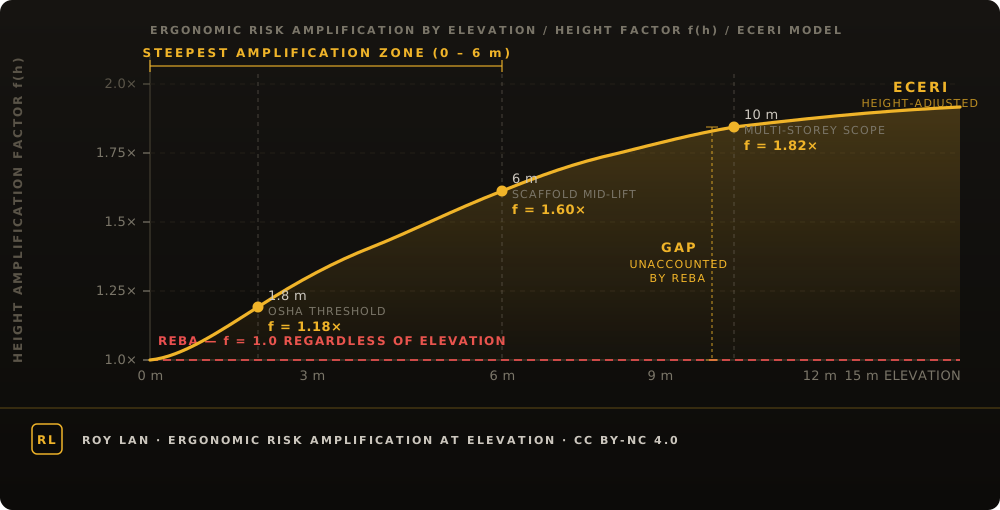
Exposure models that put the context back in and are measured on working crews: ECERI and C-ERA extend REBA for height-exposed tasks; the planning-pressure index screens hot-weather work packages before release; wearable-sensor field studies measure physiological response to structured heat interventions. Each model states its simplification out loud and ends in a screen a planner can run.
Figure
Research → Think Tank → Field Instruments
Active work
Journal manuscript, with UTSA
Physiological response to structured heat-stress interventions, measured on working crews with wearable sensors, with the Safety Innovation and Sustainable Infrastructure Group at UTSA.
What it needs
Still open
Research in motion
Get in touch
Ergonomists and occupational health researchers; contractors running summer work or height-exposed trades who can host a wearable trial.
Propose a Collaboration Offer a Site or Dataset Student Research